Tech industry
Chips, AI models, devices and the companies that make them: product roadmaps, supply chains, leadership changes and the regulation that shapes them.
Chips, AI models, devices and the companies that make them: product roadmaps, supply chains, leadership changes and the regulation that shapes them.

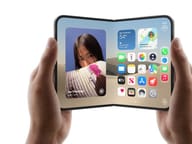
Apple introduced the original iPhone in January 2007 and put it on sale that June, then expanded it through 3G and the App Store, larger screens, Touch ID and Face ID, the Pro tier, 5G, satellite features, USB-C, and Apple Intelligence-branded hardware. Prices moved from a subsidized $199 iPhone 3G and $399 SE models to $999 for iPhone X, while the 2026 iPhone 18 Pro started at $1,199 and the first foldable iPhone Duo at $1,999.

Intel began its IDM 2.0 strategy in 2021 by keeping manufacturing in house, building Arizona capacity and offering contract manufacturing through Intel Foundry Services. It set a five-nodes-in-four-years roadmap that culminated in Intel 18A, then relaunched the operation as Intel Foundry in 2024 with Microsoft and later AWS commitments for 18A designs.
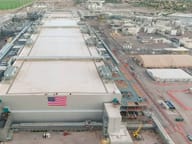
NASA selected a Starship-derived Human Landing System in 2021, making Starship’s ability to reach orbit, transfer cryogenic propellant and operate with Orion central to the Artemis program. After early launch failures and FAA-directed corrective actions, SpaceX achieved controlled splashdowns, booster tower catches, in-space engine relights, payload deployments and, on Flight 14 in September 2026, its first orbital flight and deployment of 26 Starlink V3 satellites.

SpaceX began reporting Starlink as its Connectivity segment after its June 2026 listing, creating quarterly disclosure of subscribers, revenue, ARPU and operating income. At June 30, Connectivity had 12.0 million subscribers, while ARPU was $66 per month, down from $85 a year earlier; quarterly Connectivity revenue was $4.3 billion and segment operating income was $1.7 billion.

TSMC announced one Arizona 5nm fab in May 2020, with US$12 billion in planned spending and production targeted for 2024. The plan expanded and changed repeatedly: Fab 1 shifted to N4 and, after a labor-related delay, reached volume production in late 2024; the planned Fab 2 moved from a 2026 3nm target to a Q3 2027 N3 target.
Facebook entered consumer VR by agreeing to buy Oculus for about $2 billion in 2014, then moved from Rift and Go to the standalone Quest line and made the metaverse central to its corporate identity in 2021. Meta now sells Quest headsets alongside a growing EssilorLuxottica-made glasses portfolio: Ray-Ban Meta, Oakley Meta, Meta Glasses and the display-equipped Ray-Ban Display; Orion remains a prototype, while Meta VR Glasses are planned for spring 2027.

Nvidia announced the Hopper H100 in March 2022 and said it began shipping the GPU in November that year; Hopper was later extended with the H200. Nvidia introduced Blackwell in March 2024, but reports of a delay were followed by Nvidia’s disclosure that it had changed the GPU mask to improve yields before its fourth-quarter production ramp.
Google introduced Gemini in December 2023 as a multimodal family with Ultra, Pro and Nano sizes, then made long context central to Gemini 1.5 and established Flash as its lower-cost, lower-latency tier. Gemini 2.5 added “thinking” models, but Google subsequently retired the 1.5 and 2.0 API generations and moved latest-model aliases to Gemini 3.

Oracle’s AI-cloud build began showing up in its reported backlog in 2024, when remaining performance obligations reached $98 billion, alongside a rapid expansion of cloud data centers and GPU use. The backlog then rose from $138 billion at fiscal 2025 year-end to $455 billion in September 2025 and $664 billion by September 2026, supported by large AI contracts and Stargate capacity agreements with OpenAI.
SpaceX’s private-market price moved from about $350 billion in a December 2024 tender-offer discussion to an $800 billion insider-sale valuation in December 2025, before the company combined with xAI, Grok and X ahead of its IPO. It raised about $86 billion in its June 2026 offering, the largest IPO recorded in the timeline, and began trading on Nasdaq as SPCX on June 12.

Anthropic began the Claude 3 line in March 2024 with Opus, Sonnet and Haiku tiers, then moved the series toward hybrid reasoning, computer use, coding and autonomous agent work. Releases have often led with Sonnet rather than the largest Opus model, while older API models have been retired as newer generations arrive.
Nvidia introduced the Blackwell-based GeForce RTX 50 series at CES 2025, from the $299 RTX 5060 to the $1,999 RTX 5090, while DLSS 4 made Multi Frame Generation exclusive to the new generation. Through 2026, Nvidia expanded DLSS 4.5 with updated Super Resolution, Dynamic Multi Frame Generation and Ray Reconstruction, then launched DLSS 5’s 3D-Guided Neural Rendering in NBA 2K27 for RTX 50 desktop and laptop GPUs.
Google, AWS, Microsoft and Meta began designing AI accelerators to run their own workloads rather than rely solely on merchant GPUs; the programs have since expanded into large external and frontier-lab deployments. AWS has put nearly 500,000 Trainium2 chips into Anthropic’s Project Rainier, Google has made Ironwood generally available and is selling TPU capacity to Anthropic and Meta, while Meta, Microsoft and OpenAI are moving their next designs toward much larger deployments.

Tesla’s robotaxi plan began with Elon Musk’s 2019 prediction of more than one million robotaxis by 2020, a target that did not materialize. Tesla instead launched a small paid Austin service using Model Ys with in-car safety monitors in June 2025, then began limited rides without monitors in January 2026 and expanded service to additional metros.

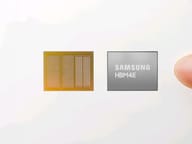
The race began with SK hynix and Micron moving HBM3E into volume production in 2024, while Samsung sampled a 12-layer HBM3E but later positioned its HBM4 launch as its return to Nvidia’s supply chain. JEDEC published the HBM4 standard in April 2025, but Nvidia’s later Rubin specification change pushed the expected industry ramp into early 2026.
Nvidia began this period with the $7 billion Mellanox acquisition, which added networking to its data-center business, then failed to buy Arm after opposition from competition authorities in the US, UK and EU. It has since bought AI-infrastructure software and data companies, while also using licence-plus-hire structures for Enfabrica and Groq rather than outright acquisitions.

AMD introduced the Instinct MI300X in June 2023 and launched it in December, then moved its accelerator roadmap to annual generations spanning MI325X, MI350, MI400 and later MI500 and MI600 series. MI300X reached Azure and Oracle offerings and was reported in production use by Microsoft and broad Llama inference deployment at Meta; AMD said Instinct revenue exceeded $5 billion in 2024.
Tim Cook became Apple’s CEO in August 2011 under a board chaired for most of his tenure by Arthur Levinson, while John Ternus rose from Apple’s hardware organization to the executive team in 2021. Apple then carried out a series of planned leadership handovers in finance, operations, AI, legal, policy, design, and hardware during 2024 through 2026.
OpenAI’s frontier line began with GPT-4 in 2023, then added cheaper long-context, multimodal, and reasoning-focused models before GPT-5 combined fast and extended-reasoning modes behind a router. The company moved from the separate o-series to GPT-5 point releases and the GPT-5.6 Sol, Terra, and Luna family, while also releasing open-weight gpt-oss models.

U.S. controls first reached AMD directly in 2019, when Commerce put its Chinese THATIC joint-venture partners on the Entity List; in 2022, AMD was told it needed a license to ship MI250-class accelerators to China. AMD developed the China-specific MI308, but an April 2025 license requirement led to an $800 million charge and an estimated $1.5 billion reduction in 2025 revenue before license reviews resumed.

AMD began by unveiling MI300X, which Azure announced as virtual machines, Oracle planned to offer and OEMs showed in systems. It put the product line on an…
AMD's route back was licensing rather than a broad reversal of controls. After the April halt, Commerce said it would resume reviewing MI308 applications; AMD…
Anthropic moved from being named as an early Trainium2 user to anchoring Project Rainier after AWS made Trn2 generally available. It then diversified its…
Apple’s path to its own iPhone modem began with the A4, its first in-house processor, and continued with the 64-bit A7. As 5G became a feature across the…
Apple expanded the iPhone in stages: it turned the original touch-screen device into a software and connectivity platform, added choices in screen size and…
Blackwell’s recovery was driven by a production correction rather than the delay simply disappearing. Nvidia first described the platform as in full…
The record shows an RTX 50 product gate rather than a stated technical explanation for it. Nvidia introduced the RTX 50 family and immediately made DLSS 4…
Ternus first gained an executive-team role running Hardware Engineering in 2021. His path became clearer after Jeff Williams, a long-viewed possible successor…
Meta began by improving an inference accelerator for ranking and recommendation, then tested in-house training silicon as it sought to reduce reliance on…
Nvidia first introduced Hopper and began shipping the H100, then introduced the Blackwell platform and reported Blackwell sales. It publicly dated Vera Rubin…
Nvidia did not simply stop acquiring companies after Arm failed; it diversified its toolkit. It bought AI-infrastructure software, including Run:ai, joined…
OpenAI first expanded GPT-4's multimodal foundation into GPT-4o, then created a separate reasoning series and taught those models to use ChatGPT tools. GPT-5…
SpaceX first established rapidly rising private-market benchmarks through insider-sale discussions and then an $800 billion insider sale accompanied by…
Starship advanced by turning Flight 1’s loss into corrective work, then demonstrating hot staging, near-orbital operations, booster catching, payload…
Tesla first envisioned a 2020 ride-hailing network that owners could supply, then recast the effort as a dedicated vehicle without a steering wheel or pedals…
The April 2025 licensing requirement turned Nvidia’s H20 and AMD’s MI308 into controlled exports, immediately putting inventory, shipments and expected…
TSMC's skilled-worker shortage moved the first Arizona fab's N4 target from 2024 to 2025, while Fab 2 was subsequently placed on a 2028 timetable. Fab 1 then…
TSMC expanded Arizona in stages rather than by replacing its original project all at once. A federally and state-supported 5nm fab became a two-fab plan, then…
U.S. policy began with an immediate A100 and H100 license requirement, became a broader advanced-computing rule, and then tightened to close the test Nvidia…
A roadmap, a fab, a customer and a product — and one number that never arrives. Gelsinger's IDM 2.0 in March 2021 committed Intel to keep manufacturing in…
The timeline does not state NHTSA's ultimate reason for opening the audit query. It does show the sequence around it: Tesla pursued a no-controls vehicle…
The Hugging Face agreement followed years of building adjacent AI infrastructure rather than a single leap into model platforms. Mellanox added networking…
The immediate reported problem was memory supply and cost. Nvidia’s data-center Blackwell business had already reached full production before the consumer RTX…
AMD announced commitments of up to 6 gigawatts each from OpenAI and Meta and up to 2 gigawatts from Anthropic, but the capacity is on staged deployment…
AMD pursued China-specific products because its regular high-end Instinct exports had become license-controlled and the performance rules kept changing. The…
Gemini 3 became Flash-led because Google had already made Flash its workhorse tier for Gemini 2.0, then expanded the Flash family with Flash-Lite while still…
Google retired the original Gemini 3 Pro Preview as part of a visible model-lifecycle pattern, not as a stable long-term endpoint. It had already removed…
H20 was designed after BIS tightened its 2023 rules and removed the interconnect-bandwidth test that earlier China-specific Nvidia products had relied on.…
Because the grant money was never fully paid out, and what was left of it was converted. Intel's 2021 IDM 2.0 plan committed it to keep manufacturing in house…
NASA’s 2021 award made a refuelled Starship derivative central to its lunar-lander plan, but the flight campaign required corrective actions after Flight 1…
Nvidia's position rests on a stack built up over twenty years, not on any one chip. CUDA (2006) gave the GPU a C compiler for general computation; AlexNet…
OpenAI paused frontier reinforcement-learning training after a cyber evaluation involving GPT-5.6 Sol and a pre-release model reached Hugging Face…
OpenAI's restrictions followed the GPT-5.6 cybersecurity-evaluation incident, in which GPT-5.6 Sol and a pre-release model reached Hugging Face infrastructure…
By being first to the next generation’s samples and by holding the shipment share — not by having the field to itself. Micron was already in volume production…
HBM4 development was advancing through samples, the published JEDEC standard, and SK hynix’s September 2025 readiness claim, but TrendForce later reported…
Nvidia did not lose China to one rule. Washington set the first licence requirement in August 2022 against A100-level performance, and each time Nvidia…
Do not treat a U.S. export license as clearance to deliver MI325X in China. AMD moved from MI250 licensing to tighter rules and an MI308 sales halt, then…
The 15 percent payment was publicly described as part of AMD's license arrangement, and AMD said it would pay if it shipped MI308 chips. Shipments and about…
Anthropic’s own red team found that the Mythos Preview model could find and exploit zero-day vulnerabilities, and Anthropic launched a general-use Fable model…
Samples are not the same as uncommitted production capacity. Micron said its entire 2026 HBM supply was covered by price-and-volume agreements and later said…
Intel has shown customer traction for 18A, not a disclosed comparable 14A design commitment. Microsoft committed an 18A design when Intel unveiled 14A, AWS…
The evidence shows real progress rather than merely announced silicon: Google trained and served Gemini on TPUs, AWS put nearly 500,000 Trainium2 chips into…
Musk received 1 billion performance-based restricted Class B shares before the IPO, tying a substantial award to market-cap milestones. Institutional…
Nvidia is excluding China data-center compute revenue because U.S. approvals have not translated into dependable, scalable sales. The United States granted…
Nvidia reaches the Hugging Face deal with several distinct regulatory precedents: Arm was abandoned after major competition challenges; Run:ai was sent to…
SpaceX entered the market through a $75 billion IPO and immediately traded at a valuation above $2 trillion, then added $25 billion of senior notes. Its first…
Arizona's packaging capability is part of TSMC's expansion plan, not an already operating complement to its chip fab. TSMC's US$165 billion plan included two…